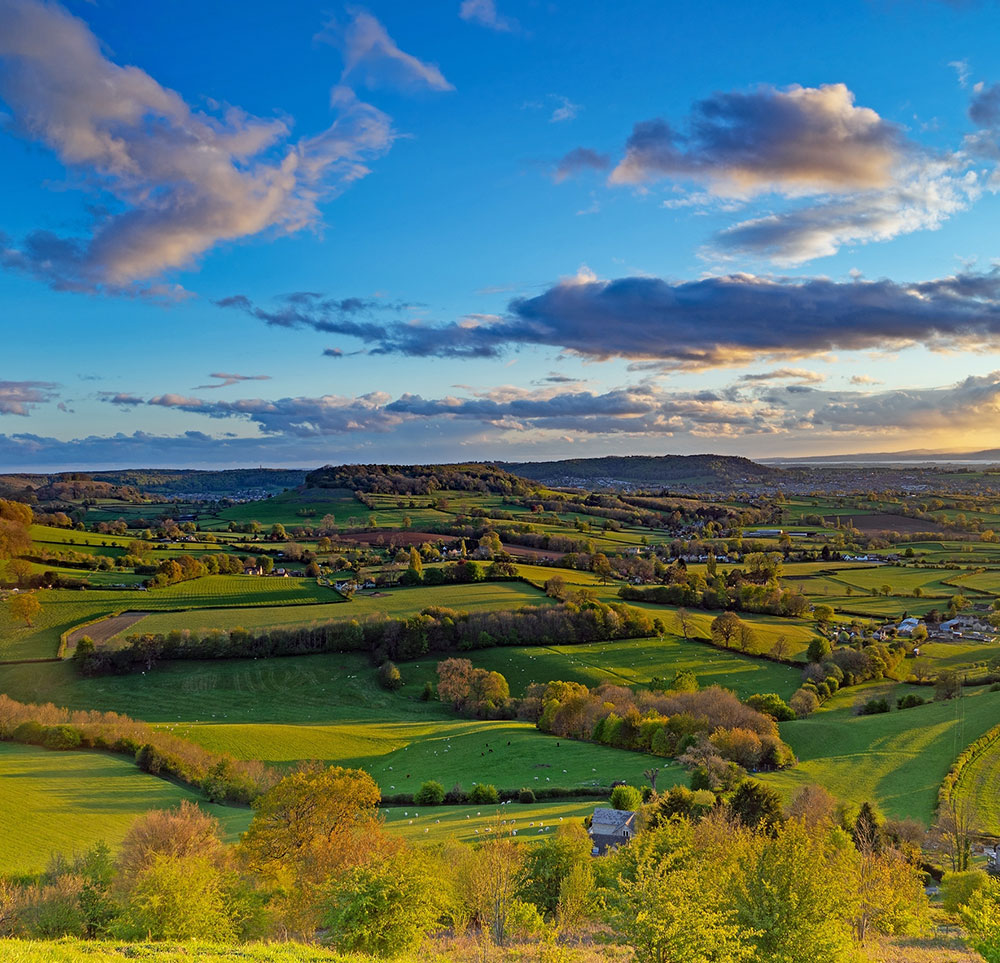
Stunning natural beauty, charming villages, and rich history make up the charming landscape of the Cotswolds. Nestled in the rolling hills of Gloucestershire, Oxfordshire, Warwickshire, and beyond, it offers a perfect escape for nature lovers, history enthusiasts, and families alike. If you’re looking to immerse yourself in quintessential English countryside, read on for a guide to exploring the Cotswolds. If you would rather someone else did the driving, take a look at our full-day Oxford and Cotswolds tour.
Why Visit the Cotswolds?
From scenic countryside and charming villages to fascinating historical landmarks and museums, the Cotswolds has so much to offer. Whether you’re hiking across the picturesque hills, wandering through the idyllic cobblestone villages, or exploring the grand stately homes, there’s truly something for everyone in the Cotswolds.
Designated as an Area of Outstanding Natural Beauty (AONB), the Cotswolds has remained largely unspoiled, preserving its unique character and offering a peaceful escape from the hustle and bustle of modern life. From the medieval charm of its market towns to the stunning landscapes of its nature reserves, the Cotswolds is a destination that beckons visitors with open arms. Our private tours of the Cotswolds make it easy to answer that invitation.
Natural Wonders
Above all else, the Cotswolds is renowned for its natural beauty, making it the perfect escape for outdoor enthusiasts and nature lovers.
For lovers of unspoilt greenery and the freshness of a beautiful nature scene, world-famous arboretum Westonbirt is home to thousands of trees from across the globe. Whether you’re visiting in the spring when the blossoms are in full bloom or in autumn when the leaves turn vibrant shades of red and gold, Westonbirt is a must-see for nature lovers.
Similarly, Woodchester Park is a beautiful, wooded valley with a glistening lake, the perfect setting for peaceful walks and wildlife spotting, especially for those visiting with their adventurous four-legged companions. The park is famous for its Victorian manor house, Woodchester Mansion, a striking and mysterious ruin.
Stately Homes and Museums
For lovers of history and culture, the Cotswolds boasts some of England’s most impressive stately homes, castles, and museums.
Located in Woodstock, Blenheim Palace is the birthplace of Winston Churchill and a UNESCO World Heritage Site. The palace’s stunning architecture and grand interiors are matched only by its breathtaking grounds which include formal gardens, a water terrace, and a stunning, expansive parkland. From Woodstock it is a short hop into Oxford itself, and our guide to Oxford will help you plan that detour.
Nestled in the rolling hills near Winchcombe, Sudeley Castle is another grand, royal location steeped in history. Once home to Henry VIII’s final wife, Catherine Parr, it is the only private castle in England to have a queen buried within its grounds. In fact, many grand Tudor figures including Henry VIII, Anne Boleyn, Lady Jane Grey, Queen Elizabeth I, and Richard III have all played a part in Sudeley’s magnificent story.
Villages and Market Towns
The Cotswolds is known for its honey-hued stone villages surrounded by greenery and adorned with florals and cobblestone bridges, each more charming than the last.
Why the villages all look related
The family resemblance is geology rather than planning. The Cotswolds are a long band of limestone laid down when this was a shallow sea, and until the railways made it cheap to cart brick and slate around the country, people built with whatever came out of the ground nearest to them. That is why cottage, church, barn and field wall in the same village tend to be the same material, and why the colour changes as you travel, running deep gold in the north around Chipping Campden and Broadway and turning pale and creamy by the time you reach Bath, where the same seam was quarried and the terraces built from it are among the first things visitors notice.
The shape of the country follows from it. The western edge is a steep escarpment falling away over the Severn vale, which is where the long views come from, while the eastern side tilts gently down towards the Thames and the softer green valleys that the Windrush, the Eye and the Coln run through.
Often referred to as the Cotswolds’ Venice, Bourton-on-the-Water is one of the most well-appreciated villages in the Cotswolds. It is famous for its beautiful, scenic bridges over the River Windrush. With its picturesque streets, traditional stone houses, and delightful tea rooms, it’s the perfect place to experience the charm of the Cotswolds.
Twin villages Upper and Lower Slaughter are among the most picturesque in the Cotswolds. Located conveniently close to Bourton-on-the-Water, these villages are famous for their idyllic settings, with the River Eye running through both villages. The tranquil walks along the river are stunningly scenic, the perfect setting for creating unforgettable memories.
Villages and towns worth the detour
Bourton and the Slaughters are the ones most people arrive for, and they earn the attention, but the Cotswolds change character as you move around them and the quieter corners tend to be the ones visitors remember. Stow-on-the-Wold sits high on the wolds around a broad market square with narrow alleys running off it, once used to funnel sheep in on market days. The north door of St Edward’s Church there is worth finding, framed by two ancient yews that have grown around the stonework until the doorway looks like something out of a story.
Chipping Campden has one long curving high street of the same honey stone, with a seventeenth century market hall standing on open arches in the middle of it, all of it paid for by the wool trade. The Cotswold Way begins here and runs the length of the escarpment down to Bath, so you will often meet walkers setting off with clean boots and no idea what is ahead of them. Broadway lies below the same ridge, wide and open where Campden is enclosed, with Broadway Tower on the hill above and a long view over the vale.
Bibury has Arlington Row, a terrace of steep-roofed cottages that began life as a wool store and later housed weavers, standing beside the River Coln. Burford drops down a steep high street to a bridge over the Windrush and makes a natural first stop if you are coming from Oxford. Painswick, over on the western edge, is known for a churchyard of clipped yews and table tombs. Cirencester was Roman Corinium and still has the mosaics to show for it in the Corinium Museum, while Castle Combe, just over the Wiltshire border, is the village film crews keep coming back to. If you have time to get off the main routes, Stanton and Snowshill sit up narrow lanes with little in them beyond stone cottages and a pub, which is rather the point, and Winchcombe makes a good base for Sudeley Castle and the walking around it.
Getting around the Cotswolds
The area is larger than a first visit usually allows for, and the gaps between villages are where plans come unstuck. The railway reaches the edges rather than the middle. The line out of London Paddington runs through Oxford and calls at Charlbury, Kingham and Moreton-in-Marsh, which puts you in the northern Cotswolds, while Kemble is the station for Cirencester and Cheltenham Spa covers the western side. Once you step off the train, buses between villages are sparse and tend to stop early in the evening, so a day built around them becomes a day built around timetables.
Driving yourself works well enough if you set off expecting the lanes to be narrow, walled on both sides and short of passing places, and if you accept that the car parks at Bourton-on-the-Water and Bibury fill early through the summer. The villages sit closer together on the map than they feel from behind the wheel, because you rarely travel quickly between them and you would not really want to. If you would rather look out of the window than at the hedgerow ahead, our four day tour taking in Oxford, the Cotswolds, Bath and Windsor covers the ground at a sensible pace with the driving taken care of.
For more information on how to tour the Cotswolds see our private tours: private Cotswolds tours