London is a city brimming with history, culture and iconic landmarks, and it is widely recognised as one of the most exciting capital cities to visit in Europe. The difficulty is never finding something to see; it is choosing what to leave out. Read on for ten famous London landmarks worth planning a first visit around, with a practical note or two on each. Many visitors prefer to explore the city with a guide on a full-day private tour of London, and our private tours from London go well beyond the capital whenever you are ready for more.
The British Museum
One of the world’s most incredible museums, the British Museum houses an extensive collection of over 8 million works of art and historical artefacts from across the globe. Highlights include the Rosetta Stone, the Egyptian mummies and the Parthenon sculptures, and the Great Court at the heart of the building, with its sweeping glass roof, is a sight in its own right before you have looked at a single exhibit.
A practical note born of experience: the famous rooms are at their busiest from mid-morning, so head straight for the Rosetta Stone when you arrive and work outwards from there. Nobody sees the whole museum in one visit, and the day is happier once you stop trying.
The Tower of London
A historic fortress and former royal palace, the Tower of London is famous for housing the Crown Jewels, including the Imperial State Crown and St Edward’s Crown, and for nine centuries of turbulent history within its walls.
Anne Boleyn, one of the most famous figures in British history, was imprisoned in the Beauchamp Tower before her trial and executed on Tower Green, just outside the tower’s walls. Visitors can stand in both places, which brings home the peril of life at the Tudor court rather sharply. The Yeoman Warders, better known as Beefeaters, lead regular tours and tell the grisly parts with obvious relish, and the ravens still stalk the lawns; legend holds that the kingdom falls if they ever leave, so they are exceptionally well looked after.
Tower Bridge
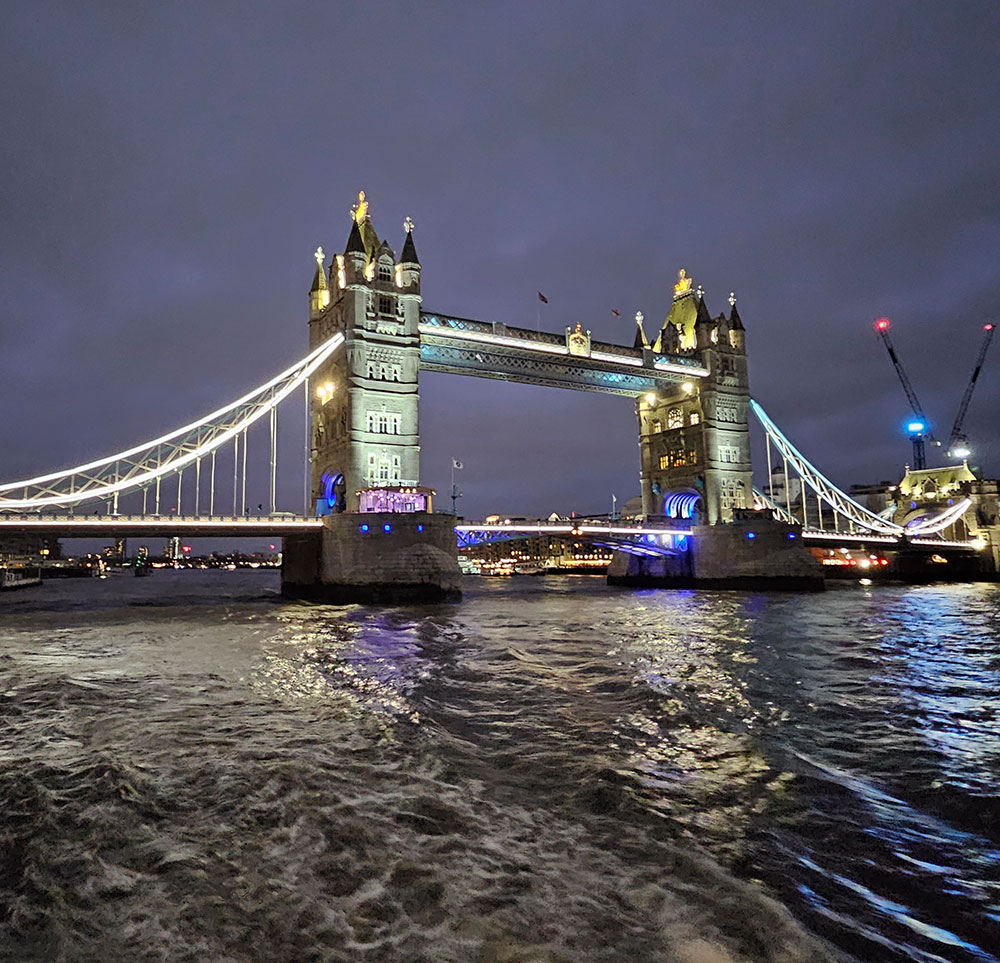
Beside the Tower stands the bridge most people are picturing when they say London Bridge. Tower Bridge is the one with the twin Gothic towers and the lifting roadway, completed in 1894 and still opening for tall ships today. The high-level walkways between the towers now include a glass floor, so you can watch the road, the river and the pedestrians pass beneath your feet, and the riverside path by the Tower gives you the classic photograph of the bridge at any time of day.
Buckingham Palace
The official residence of the British monarch, currently King Charles III, Buckingham Palace is an essential stop for any London tourist.
Outside the Palace, tourists can watch the Changing of the Guard ceremony or stroll through the nearby St. James’s Park. The ceremony runs on set days rather than every day, so it is worth checking the schedule before you plan a morning around it, and arriving early earns you a spot at the railings. During the summer, Buckingham Palace opens its doors to the public, allowing visitors to explore the opulent State Rooms, the King’s Gallery featuring art exhibitions from the Royal Collection, and the beautifully landscaped Palace gardens. If the royal theme appeals, we have written about more royal places to visit in and around London.
The Palace of Westminster
The Palace of Westminster, also known as the Houses of Parliament, is one of the most iconic and recognisable landmarks in Europe. Both the House of Commons and the House of Lords operate from this striking neo-Gothic building.
The Palace of Westminster has a complex history of construction and reconstruction. Westminster Hall is the oldest surviving part of the building, dating back to the Palace’s origins in the 11th century. Much of the Palace was destroyed by a fire in 1834, followed by a long period of reconstruction from the 1840s to its recompletion in 1876.
The famous clock tower, named Elizabeth Tower in honour of Queen Elizabeth II and containing the bell known iconically as Big Ben, stands proudly beside the Palace on the Thames, offering one of the most iconic photo opportunities in the city. Travellers with more time to spare might enjoy our 3 Day British Odyssey tour, which begins among these landmarks before heading for older wonders.
Westminster Abbey
Across the road from Parliament stands Westminster Abbey, where English and then British monarchs have been crowned since 1066 and where a remarkable number of them remain, buried alongside Chaucer, Newton, Darwin and Dickens. Walking through it is the closest thing Britain has to leafing through a national memory in stone. The Abbey is a working church as well as a landmark, which means it closes to sightseeing for services and on most Sundays, and the quietest visits tend to come first thing on a weekday morning.
St Paul’s Cathedral
Sir Christopher Wren’s dome has anchored the City’s skyline for more than three centuries and famously rode out the Blitz, photographed standing amid the smoke in one of the defining images of wartime London. The cathedral went on to host Churchill’s state funeral and the wedding of Charles and Diana. Inside, the climb to the top passes the Whispering Gallery on its way up to the Golden Gallery, several hundred steps in all, where the reward is one of the finest views in the capital. Anyone who would rather not earn a view on foot can settle for the cathedral floor and the crypt, where Wren himself is buried under a famously modest inscription.
Trafalgar Square and the National Gallery
Trafalgar Square is the natural centre of sightseeing London, with Nelson on his column, the four bronze lions every visitor seems compelled to photograph, and a rotating piece of contemporary art on the Fourth Plinth. Along the north side runs the National Gallery, home to works by Turner and Constable as well as Van Gogh’s Sunflowers. The square also makes an excellent navigation point: Whitehall runs south towards Parliament, The Mall leads west to Buckingham Palace, and Covent Garden is a short walk to the east.
The London Eye
The great wheel on the South Bank has been turning since the millennium and has thoroughly earned its place on the skyline. The capsules move slowly enough that boarding is a stroll rather than a leap, and on a clear day the view from the top takes in nearly everything else on this list. Queues are at their gentlest early in the day, and the riverside walk that starts at its feet, past the street performers and the bookstalls under Waterloo Bridge, is one of the simplest pleasures London offers.
Kensington Palace and Hyde Park
West of the centre, Hyde Park and Kensington Gardens run together into a single sweep of green big enough to lose the city in. Rowing boats go out on the Serpentine, Speakers’ Corner still hosts its Sunday orators, and at the western end sits Kensington Palace, childhood home of Queen Victoria, with State Rooms that open to visitors. The parks are the antidote to a day of pavements, and crossing them on foot is often quicker than going around, and always pleasanter.
Covent Garden
Covent Garden has traded since the seventeenth century, and its Victorian market halls now hold crafts, boutiques and food rather than fruit and vegetables. The street performers in the piazza audition for their pitches, which goes some way to explaining the standard, and the surrounding streets are home to the Royal Opera House and the London Transport Museum. It earns its place on this list as the landmark you can enjoy without a plan or particularly good weather.
Every landmark here sits within a surprisingly compact stretch of the city, which is why a well-planned day covers more of them than most first-time visitors expect, and why we spend so many of our own days showing guests around them. Music fans have their own version of this list, and our black cab tour of London’s rock and roll sites runs from Abbey Road to Carnaby Street and the Royal Albert Hall. If you would rather see a good many of them sitting down, our London afternoon tea bus tour passes the Tower, Westminster and St Paul’s while the tea is served on board. And when you have had your fill of the capital, the countryside is closer than it looks: our day trips from London take in the famous places within easy reach of the city and still have you back in time for dinner.