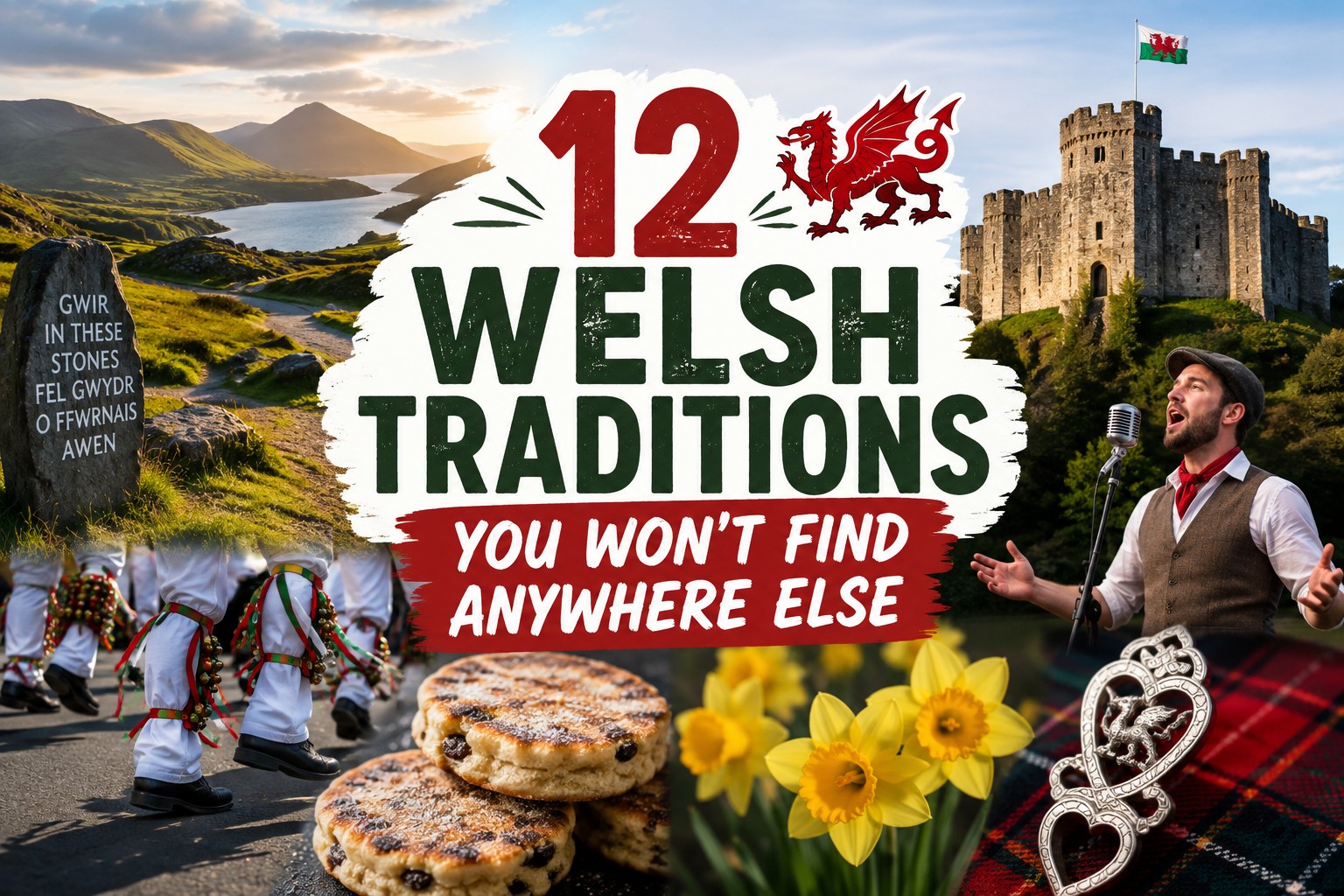
From ancient customs and romantic rituals to choirs, festivals, and male-choir rehearsals, Welsh culture is wonderfully distinctive. If you’re planning a trip through Wales, these traditions add real depth to the experience. Many of these customs turn up naturally on day trips from Cardiff. Best UK Tours thinks it’s worth weaving a bit of cultural discovery into your itinerary.
1. St David’s Day
Wales celebrates its patron saint on 1 March, and it does so with rather more enthusiasm than your average national observance. People wear daffodils and leeks, schools hold performances, and streets fill with Welsh flags and proud displays of red, white, and green. It’s a day of national pride, music, and plenty of conversation about leeks!. On St David’s Day you’ll see the tradition at its best in towns and cities across the country, especially on a well-planned Welsh tour.
- Welsh Male Voice Choirs (Côr Meibion)
Wales is often called the “Land of Song”, and much of that reputation rests on its world-famous male voice choirs. These choirs are known as côr meibion in Welsh and are deeply woven into the country’s cultural and social history, especially in the south of the country. The tradition grew out of 19th‑century chapels and coal mining communities, where men sang together after long shifts underground. Singing became a form of comfort, camaraderie, and pride, and today there are around 100 male choirs still active across Wales, many of which allow visitors to attend and view rehearsals.
3. Mari Lwyd
This is one of Wales’s most famous and gloriously odd customs; Mari Lwyd involves a horse’s skull mounted on a pole and draped in ribbons and cloth, carried from house to house during the winter festive season. The group performs verse battles at the door, trying to win entry to the home. If it sounds surreal, that’s because it is surreal, but it’s also brilliant fun and steeped in old folk tradition. Few customs manage to be so eerie, playful, and charming all at once, and Wales, quite sensibly, keeps this one for itself.
4. St Dwynwen’s Day
Before Valentine’s Day takes over the calendar, Wales has its own celebration of love on 25 January. St Dwynwen’s Day honours the Welsh patron saint of lovers, and many couples mark it with cards, gifts, romantic meals, or a traditional carved love spoon. It is sweeter and less commercial than the February version, which is probably why it remains so beloved. A bit of proper romance, without the supermarket heart-shaped tat and chocolates.
5. Welsh Love Spoons
Love spoons are one of the loveliest Welsh traditions that still endure today. Historically, men would carve ornate wooden spoons for the women they hoped to court, with symbols and patterns representing affection, commitment, and good fortune. The tradition dates back centuries and still survives as a treasured craft and gift. You’ll often see them sold in Welsh craft shops and galleries. They’re much more thoughtful than a box of chocolates and last rather a bit longer too.
6. Calennig
Welsh New Year’s customs include Calennig, a tradition involving gift-giving, good wishes, and small tokens of fortune. In some areas, children would visit homes singing and offering blessings in exchange for sweets, coins, or fruit. It’s a charming old custom, with just enough cheek to feel alive rather than museum-bound. It gives the new year a sense of generosity and neighbourliness, which is no bad way to start the next 12 months.
7. The Welsh Not
This one is not festive in the true sense, but it is deeply important to Welsh heritage. The “Welsh Not” was a wooden token once used in schools to punish children for speaking Welsh (something not deemed acceptable in days gone by). Today, the Welsh language is proudly celebrated rather than suppressed, and that revival is one of the great cultural successes of modern Wales. You’ll hear it everywhere on a proper trip, especially on journeys through the west and northern cities of the country.
8. Twmpath Dancing
Twmpath is a Welsh social folk dance, usually accompanied by live music and a strong sense of community. It’s lively, welcoming, and the sort of thing that can involve people of all ages, all abilities, and varying levels of footwork confidence. The emphasis is on joining in rather than getting it perfect, which is a relief to anyone with two left feet. It’s a lovely example of how Welsh culture blends celebration with togetherness. In other words, you dance, you laugh, and nobody takes themselves (or anything else) too seriously.
9. Leek and Daffodil Symbols
Wales has two national emblems that you’ll see everywhere on special occasions: the leek and the daffodil. The leek is the older symbol, linked to legend and military identity, while the daffodil became popular because it blooms around St David’s Day and looks rather splendid on a lapel. Together, they capture something very Welsh: one symbol practical and earthy, the other bright and cheerful, in a pairing that works surprisingly well
10. Cawl at Special Gatherings
Cawl is not just food; it is part of the social fabric. This traditional Welsh stew of lamb or beef, leeks, potatoes, and vegetables is especially associated with family gatherings, cold-weather comfort, and Sunday-style simplicity. It’s the sort of dish that says, “Come in, sit down, you look underfed.” While not a festival in itself, cawl belongs firmly within Welsh tradition because it appears so often at community and seasonal occasions. If Wales had a hug in bowl form, this would be it.
11. Noson Lawen
Translated roughly as “merry night”, Noson Lawen is a traditional Welsh evening of music, storytelling, singing, and performance. It has long been a way for communities to gather, entertain each other, and preserve stories and traditions. It’s informal, warm, and highly communal. Rather than sitting passively, people join in, which is generally the Welsh way of doing things if there’s any fun to be had.
12. Llangollen Eisteddfod
Wales is rich in festivals, but the Llangollen International Musical Eisteddfod stands out as one of the most distinctive. It brings performers from around the world together with Welsh choirs, dance, and music in a festival of friendship and cultural exchange. It’s proof that Wales can be proudly itself while also being warmly open to the world. For visitors, it’s a brilliant example of how Welsh tradition is not frozen in the past; it evolves, welcomes, and occasionally bursts into song.
A country full of character
There’s a reason why Wales leaves such a lasting impression: it has a way of turning history into something warm, human, and memorable. So whether you’re drawn by the Eisteddfod, the romance of St Dwynwen’s Day, or simply a very good bowl of cawl, Wales has a tradition for you. If the capital is your starting point, our first-time visitor’s guide to Cardiff will help you settle in.
Best UK Tours provides Welsh Tours that connect culture and scenery, covering a broad sweep of the country, from dramatic landscapes and deep heritage to city life and modern Welsh identity. A private tour from Cardiff to the Wye Valley is a lovely way to round off a Welsh itinerary.