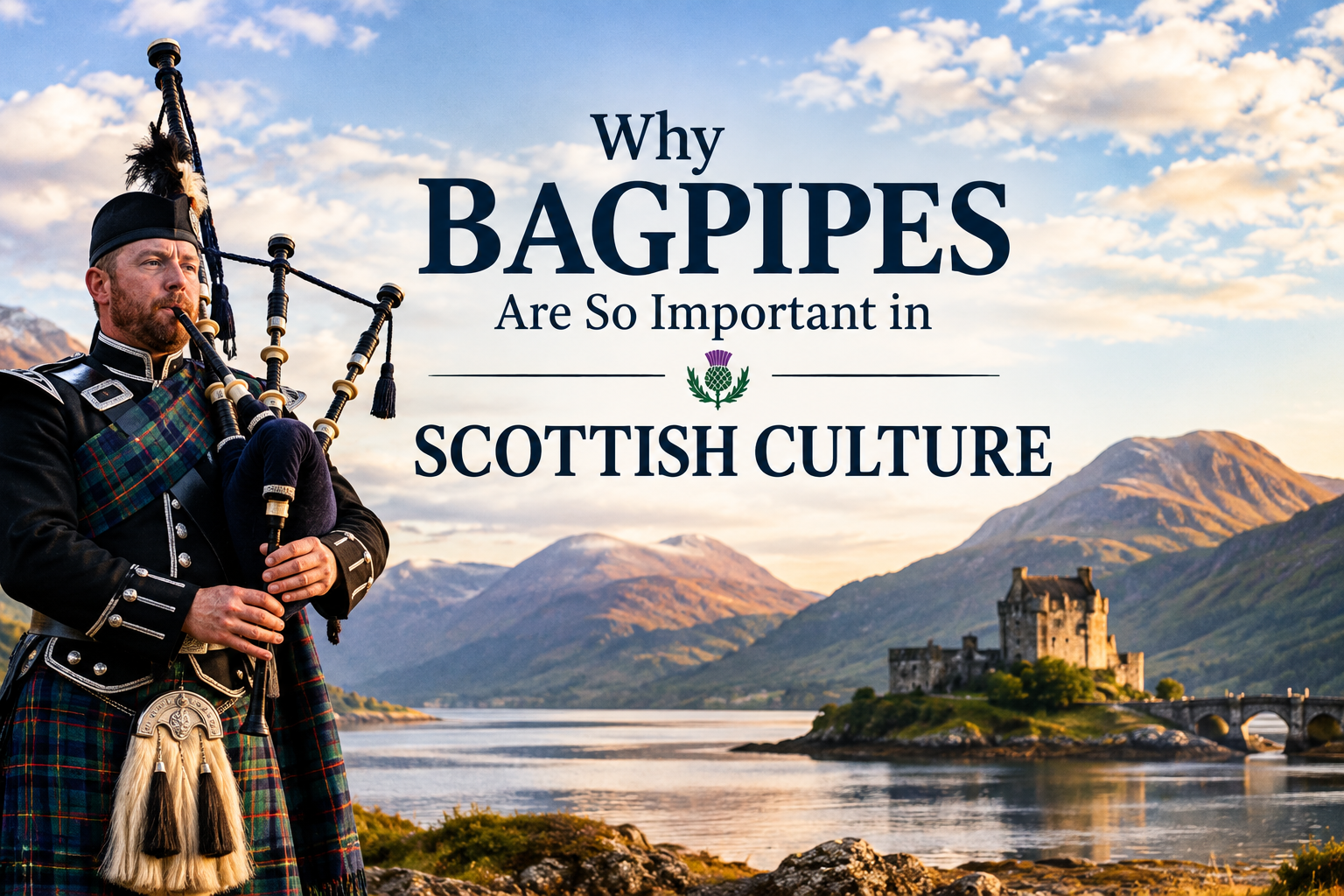
The bagpipes are Scotland’s national instrument; they are its voice, its heartbeat, and its most recognisable cultural symbol. If you’ve ever been to Scotland, you’ve probably heard them: the pipes echoing drone over a castle, a city street, a graveside, or a heather-covered hillside. If you’re planning a tour of Scotland and want to understand why the sound of the bagpipes moves people to tears (or at least gives them goosebumps), here’s why they matter so much to the people of Scotland.
How Ancient Are Scottish Bagpipes
Bagpipes are ancient and some historians believe the instrument may have originated in places like ancient Egypt, with references to “pipers of Thebes” dating back to 400 BC, and that they were later brought to Britain by the Romans. But Scotland took the instrument and made it its own. The Great Highland Bagpipe is the grand, powerful version with a distinctive drone and sharp, piercing melody. It was originally developed and refined by the Highlanders, and by the 15th century, bagpipes were established in Scotland. Early references to bagpipes appeared in literature and artwork.
Are They Part of Modern Scottish Culture?
Within the Scottish clan system, the piper historically held a high and honoured position. In the Lowlands, pipers were part of travelling minstrel groups, playing at weddings, feasts, and fairs. In the Highlands, the piper occupied a more serious and elevated role, closely tied to the clan chief and the wider community. By the 1700s, the piper had replaced the harpist as the primary Celtic musician of choice. The sound of the pipes was entertainment, but it was also a marker of heritage and belonging.
Were Bagpipes Instruments Of War?
The first clear mention of bagpipes being used in battle in Scotland dates to 1549 at the Battle of Pinkie, when they replaced trumpets to inspire Highland warriors into combat. The penetrating sound of the pipes cut through the noise of the battlefield and could allegedly be heard miles away. Bagpipes were believed to boost morale, intimidate the enemy, and keep the troops moving forward. Furthermore, they were classified as instruments of war during the Highland uprisings of the early 1700s. They were famously played at battles such as Bannockburn.
Did The British Government Ban Them?
After the defeat of Bonnie Prince Charlie at the Battle of Culloden in 1746, the British government in London moved to crush the rebellious Scottish clan system. An Act of Parliament was passed that made carrying weapons and wearing kilts a penal offence. The bagpipes, as instruments of war, were effectively banned by the legislation. This was an attempt to suppress Highland culture, yet the pipes were kept alive. They were secretly passed down through families and hidden from authorities. The ban was eventually repealed in 1785.
Are They A Symbol Used In The British Army?
Ironically, the instrument that was once banned became a global icon of Scotland through the British Empire. Highland regiments were sometimes nicknamed the “Devils in Skirts” and often spearheaded British military campaigns. At the head of each regiment walked an unarmed piper, leading troops into battle. Scottish pipers were military-trained in the First and Second World Wars. This military association helped spread the Great Highland Bagpipe’s reputation as a symbol of bravery, pride, and Scottish identity.
Are Bagpipes Tied To Scotland’s Identity?
The bagpipes are much more than a musical instrument; they are a powerful symbol of Scotland’s culture and history. Playing traditional Scottish tunes on the bagpipes is a way of celebrating and honouring the nation’s heritage and culture. The unique sound and visual presence of the piper, traditionally wearing a kilt and standing tall, invokes a strong sense of patriotism and unity among the Scottish people. Moreover, the bagpipe is a symbol of Scottish identity and pride. It has become deeply intertwined with Scottish life and heritage.
Are Bagpipes Played For Every Occasion?
From weddings and funerals to graduations, memorial services, and other milestones, the presence of a bagpiper adds tradition and emotional depth to many of life’s important occasions. At a wedding, the pipes might announce the bride’s entrance or mark a key moment in the ceremony. At a funeral, they can offer a moving tribute with a haunting sound that is both intimate and grand. It’s common to hear bagpipes at events like weddings, funerals, birthdays, graduations and family gatherings.
Are They Played All Over Scotland?
Bagpipes play a big role in Scottish history and culture – along with a lone piper playing at special events like weddings and funerals, you will also hear them at celebrations, festivals, and community events like:
- Castle events
- Highland games
- Festivals
- Cultural events
- Parades and public celebrations
- Whisky distilleries (yes, really!)
You know you’re in Scotland when you hear the sound of the bagpipes floating over famous lochs and pine forests. The bagpipes are as central to Scottish identity and culture as kilts, haggis, and whisky.
11. The pipes are taught, preserved, and passed on
Many Scottish institutions have made efforts to preserve and promote the art of bagpiping so that it is not lost or swallowed up by history. Piping schools, societies, and competitions work to ensure that the tradition continues and evolves. A resurgence of interest in traditional Scottish music has helped popularise bagpipes worldwide over the past couple of decades. As a result, this renewed interest led to the establishment of pipe bands and piping competitions. These also help to keep the Scottish national instrument alive.
Bagpipes Define the Nation
The bagpipe is much more than a musical instrument; it is a powerful symbol of Scotland’s rich culture and history, representing the Scottish people’s strength and resilience. While the exact timeline and origins of the bagpipes are still debated, there is no denying the instrument’s impact on Scotland’s culture. When you hear the skirl of the pipes over a Highland landscape, or in the middle of a bustling city like Edinburgh, you’re hearing history, identity, pride, and the voice of a nation that has kept traditional Bagpipes alive through banishment and war, tradition and evolution.
See the best cultural highlights. Experience the Scottish Highlands and cities with a private bespoke tour from Best UK Tours.