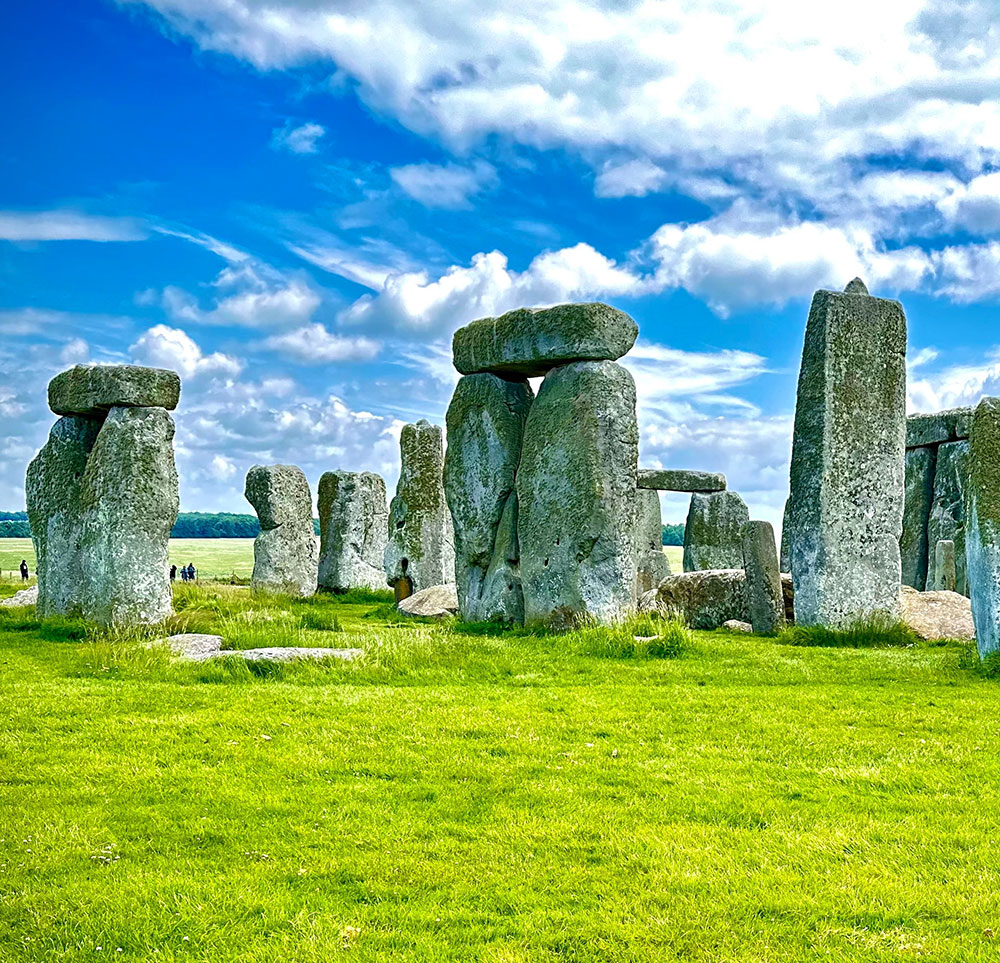
Stonehenge is a breathtaking Neolithic site which dates back over 5,000 years. Admired for its incredible structure and renowned for its ancient mystery and the wonder it inspires, this famous UNESCO World Heritage Site is widely recognised as one of the greatest prehistoric locations in the world.
Situated just over an hour from London, Stonehenge is a conveniently located, well-connected site which makes for an inspiring and fascinating day trip. If you would rather leave the driving to someone else, we offer a private day trip to Stonehenge. Therefore, read on for a comprehensive visitor’s guide.
When to Visit
Due to the splendour and renown of the site, Stonehenge can get extremely busy, especially on summer weekends. To experience Stonehenge in a quiet, calm environment, it is best to avoid weekends, school holidays, and warm, sunny days. Please also note that Stonehenge is closed on Christmas Day.
For the best chance of having the stones all to yourself on your visit, aim to go between Monday to Thursday during cold weather. Crowds come up a lot, so we have answered the questions first-time visitors ask at Stonehenge in a separate post. Ideally, arrive before 11am.
Opening Times
Stonehenge has different opening times depending on the time of year:
Summer Opening Times
From the end of May to the beginning of September, Stonehenge is open from 9:30am to 7:00pm. The final entry is at 5:00pm.
Winter Opening Times
From the beginning of September to the end of May, Stonehenge is open from 9:30am to 5:00pm. The final entry is at 3:00pm.
Booking your slot
Stonehenge works on timed entry, so you choose a slot when you book rather than turning up and joining a queue at the gate. On summer weekends the earlier slots go well before the day itself arrives, and the middle of the day is the part you most want to avoid, so it pays to book as far ahead as you can and take the earliest time that suits you. English Heritage look after the site and sell the tickets, and members are admitted on their membership, although they still need to reserve a slot like everybody else. Ticket types, prices and opening hours all shift with the season, so treat the official page as the last word on the detail rather than anything you read elsewhere.
If you are coming out on a private tour with us, the timing works the other way round. We look at the slot first and build the rest of the day around it, because everything else on an itinerary can flex by half an hour and the stones cannot.
Getting from the visitor centre to the stones
The visitor centre sits well back from the circle, which catches out anyone expecting to park alongside the stones. A shuttle runs between the two, and there is also a walking route across the downland for anyone who would rather come at the monument on foot and watch it grow on the skyline. On a dry day that walk is much the better arrival, so leave a little extra time for it if the weather is behaving.
The Mystery of Stonehenge
Stonehenge is a megalithic circle on Salisbury Plain. For thousands of years, people have debated about the monument’s mysterious past.
Folklore claims Stonehenge was conjured by Merlin, the famous wizard of Arthurian legend. The stones were said to have been magically transported from giants in Ireland. Others have claimed that, when the Vikings invaded England, the invading Danes erected the stones. Others have theorised that Stonehenge are the ruins of an ancient Roman temple.
The leading modern day interpretations are that it is either a holy site or a scientific observatory. Both interpretations are based on the site’s celestial influence. Signs point towards the site being used as a megalithic calendar for plotting dates and predicting astronomical events and solar eclipses. That calendar still draws people today, as our post on the winter solstice at Stonehenge explains. And if you want to stand inside the circle itself rather than view it from the path, our guide to Stonehenge inner circle access explains how that is arranged.
What you are looking at from the path
The circle is roped off and you walk a path that loops around it, close enough to read the surfaces of the stones and see how differently the two kinds have weathered. The huge uprights and lintels are sarsen, a hard local sandstone hauled from downland to the north, and the smaller, darker stones set inside them are bluestones that travelled the whole way from the Preseli Hills in west Wales, which is still the part of the story that stops people mid sentence. Look beyond the circle as well, because the Heel Stone stands apart from the ring and the skyline all around is dotted with burial mounds. The monument makes far more sense once you read it as the centre of a landscape rather than a single object in a field.
Standing inside the circle
An ordinary ticket keeps you on the path. Going in among the stones is arranged separately, and those visits run either before the site opens to the public or after it has closed for the day, never during opening hours, which is why they mean an early start or a late finish. Numbers in each session are small and the sessions are spoken for a long way ahead, so it is not something you can decide on the morning. We build whole days around a slot when one is available, including our inner circle and Roman Baths day.
Facilities
During your visit, enjoy your pick of a selection of fresh sandwiches, cakes, and other refreshments at the Stonehenge café, or bring along a picnic to enjoy in the site’s designated picnic area. Also, the Stonehenge gift shop offers an extensive range of gifts, souvenirs, and other items to peruse following your visit to the monument.
Male, female, and accessible toilets, as well as baby and adult change facilities, are available at the visitor centre.
What to wear
Salisbury Plain is open chalk downland and there is very little between you and the weather once you leave the visitor centre, so the wind tends to be the thing people remember. Bring a layer more than you think you need, even in July, and something waterproof whatever the forecast says, because showers cross the plain quickly and there is nowhere to shelter out at the circle. The ground underfoot is grass and gravel rather than paving, so shoes you can walk in matter more than anything else you pack for the day.
Pairing Stonehenge with somewhere else
The stones do not fill a day on their own, which is why almost nobody visits them on their own. Salisbury sits close by with its cathedral, its spire and one of the surviving copies of Magna Carta, and it makes an unhurried afternoon after a morning at the circle, which is how our Stonehenge and Salisbury Cathedral day is arranged. Bath and Windsor both work as the other half of the day too, depending on whether you would rather follow the Romans or the royals.
What a private day costs
There is no standard figure, because there is no standard day. What you pay depends on how long we are out, how far we drive and what has to be booked on your behalf, so every itinerary is quoted on its own terms once we know what you want to see. You get that quote before anything is confirmed, so you know where you stand before you commit to the day.
Opening times and tickets are on the English Heritage Stonehenge page
You can browse all of our tours of Stonehenge.