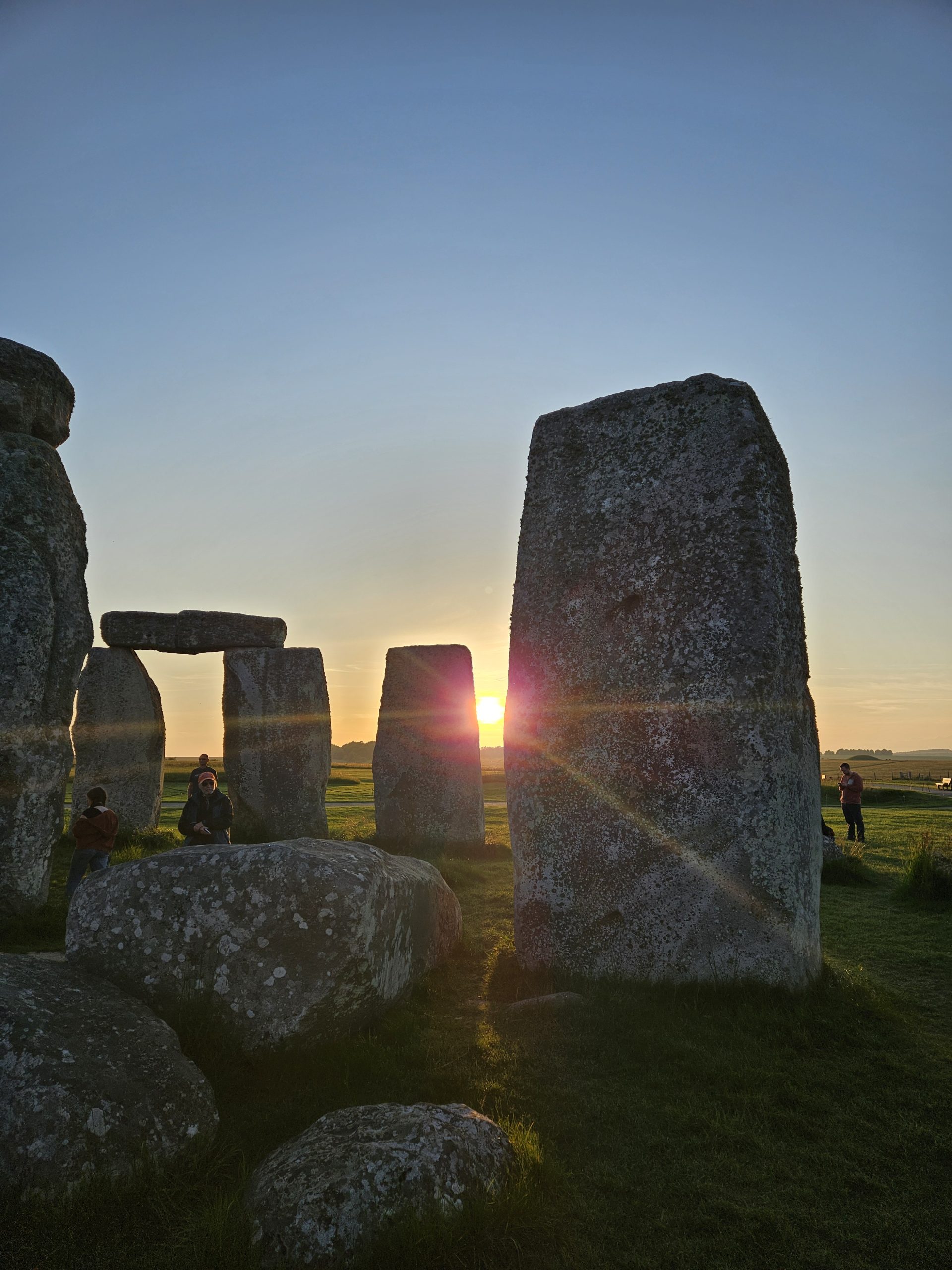
Most visitors arrive at Stonehenge often having seen countless photographs, yet the reality of standing before 5,000-year-old stones still manages to surprise and amaze visitors. After guiding numerous groups to this UNESCO World Heritage Site, Best UK Tours has noticed that certain reactions are common.
Understanding what to expect helps you to visit and view Stonehenge as it should be seen.
1. Is Stonehenge As Big As It Looks?
Nearly everyone’s first reaction involves surprise at the scale of the famous monument – or lack of!. Photographs, taken from dramatic angles, create impressions of massive monuments dominating the landscape. The reality is a little more modest, the tallest standing stones reach about 26 feet, and the circle itself is roughly 100 feet in diameter. But once you consider what it took to create the ancient stone circle, you might regain your sense of awe.
Neolithic people moved the stones using only rope, timber, and determination, and considering they weigh up to 25 tons each, that’s an impressive feat! The horizontal lintels weigh around 7 tons each and were lifted to height and positioned using Stone Age technology, after being transported 200 miles from Wales.
Standing in front of Stonehenge and contemplating that engineering and logistical challenge will make you ask “How on earth did they do it?”
2. Can You Touch The Stones?
The rope barrier keeping visitors about 10 metres from the stones disappoints some people initially. Visitors often want to connect physically with something so ancient and significant.
Unfortunately, millions of people touching the stones caused erosion, and conservation took priority over tactile experiences. Visitors to Stonehenge circle the monument on a designated path, observing from a respectful distance.
3. Is Stonehenge Miles Away From Anything?
Stonehenge doesn’t exist in isolation, the area surrounding the monument contains hundreds of burial mounds, earthworks, and archaeological features. It was a ritual landscape of enormous importance, and the surrounding area contains Neolithic and Bronze Age burial sites.
Look beyond the stones and you’ll notice lumps and bumps across the landscape, these are the remaining signs of ancient constructions.
- The Avenue, a processional route leading to Stonehenge, extended nearly two miles toward the River Avon.
- Durrington Walls, a massive henge enclosure larger than Stonehenge, sits just two miles away.
Many visitors to Stonehenge choose to combine their tour with other historic sites such as:
4. Does It Get Crowded?
Stonehenge attracts over a million visitors annually, it’s the price of iconic status. The crowds don’t diminish Stonehenge, but they can certainly affect the atmosphere depending on their size and volume.
Early morning or late afternoon visits often encounter fewer people, so if you want to avoid the crowds this is the best time to go. Off-season touring (November through March) also means less people and often more dramatic weather.
5. Does Bad Weather Affect Viewing?
Stonehenge under brilliant sunshine, with green grass and blue skies, looks lovely in a picture-postcard sort of way. But Stonehenge photographed under brooding grey clouds, with winds sweeping across Salisbury Plain and misty drizzle, adds to the feeling of ancient mystery.
We’re not suggesting you hope for miserable weather, but British changeability means you’ll likely experience some atmospheric conditions during your visit. Summer solstice sunset draws enormous crowds every year for the astronomical alignments and we offer a special limited overnight tour so you can experience the occasion.
6. Is There A Visitor’s Centre?
Stonehenge’s modern visitor centre, opened in 2013 and is located 1.5 miles from the stones, which initially strikes some visitors as a bit far. But removing the old facilities from the monument’s immediate vicinity restored the landscape’s integrity and improved the sightseeing experience. There is a shuttle bus that transports visitors between the centre and the stones, or you can walk the path across the landscape, which takes about 20-30 minutes.
The visitor’s centre houses excellent exhibitions explaining Stonehenge’s construction, use, and significance over the centuries. Reconstructed Neolithic houses demonstrate how the builders lived, displays of tools and artifacts reveal daily life and the effort of monument construction.
7. How Can I Learn More About Stonehenge?
Stonehenge provides audio guides with admission, which transforms the visit from “looking at old stones” to understanding what you’re actually seeing. The audio recording explains construction theories, discusses astronomical alignments, and provides information about the people who built and used Stonehenge.
The audio also explains features otherwise easily missed; the bluestone inner circle transported from Wales, the shaping of the sarsen stones, the mortise and tenon joints securing the lintels. These details matter for full appreciation, and our guides will be happy to share additional facts and stories with you.
8. How Old Is Stonehenge, Really?
Stonehenge’s construction began around 3000 BCE, with the stone circle completed by roughly 2500 BCE. This means Stonehenge was already ancient when the Pyramids of Giza were built. It was ancient when the Romans arrived in Britain, and had stood for over 4,000 years when William the Conqueror invaded in 1066.
It’s a moving experience to stand before stones positioned by people who lived 5,000 years ago, who left no written records, whose language is unknown, whose society we understand only through archaeological evidence. We don’t know what Stonehenge really meant to them, what rituals occurred here, or why they considered it worth the (literally!) monumental effort.
9. What Was Stonehenge Used For?
Theories about Stonehenge’s purpose abound; astronomical observatory, healing temple, burial ground, ceremonial centre, calendar, acoustic structure. Evidence supports aspects of multiple theories, but definitive answers have always remained elusive. It’s a historic puzzle that stays unanswered, despite sophisticated archaeological techniques and decades of research.
10. How Can I Get The Best Photos?
Everyone photographs Stonehenge, but the photographs rarely satisfy upon later review. The scale, the landscape context, the quality of light, the sense of age doesn’t translate to phone or camera screens the way you’d hope.
At Best UK Tours we know that some places require your physical presence. To fully appreciate Stonehenge, you need to stand on Salisbury Plain, feel the wind, see the stones against the sky, and contemplate their existence. Photographs document the experience, but will never truly capture it completely.
Book your Stonehenge tour with Best UK Tours and experience the history and mystery of this ancient monument.