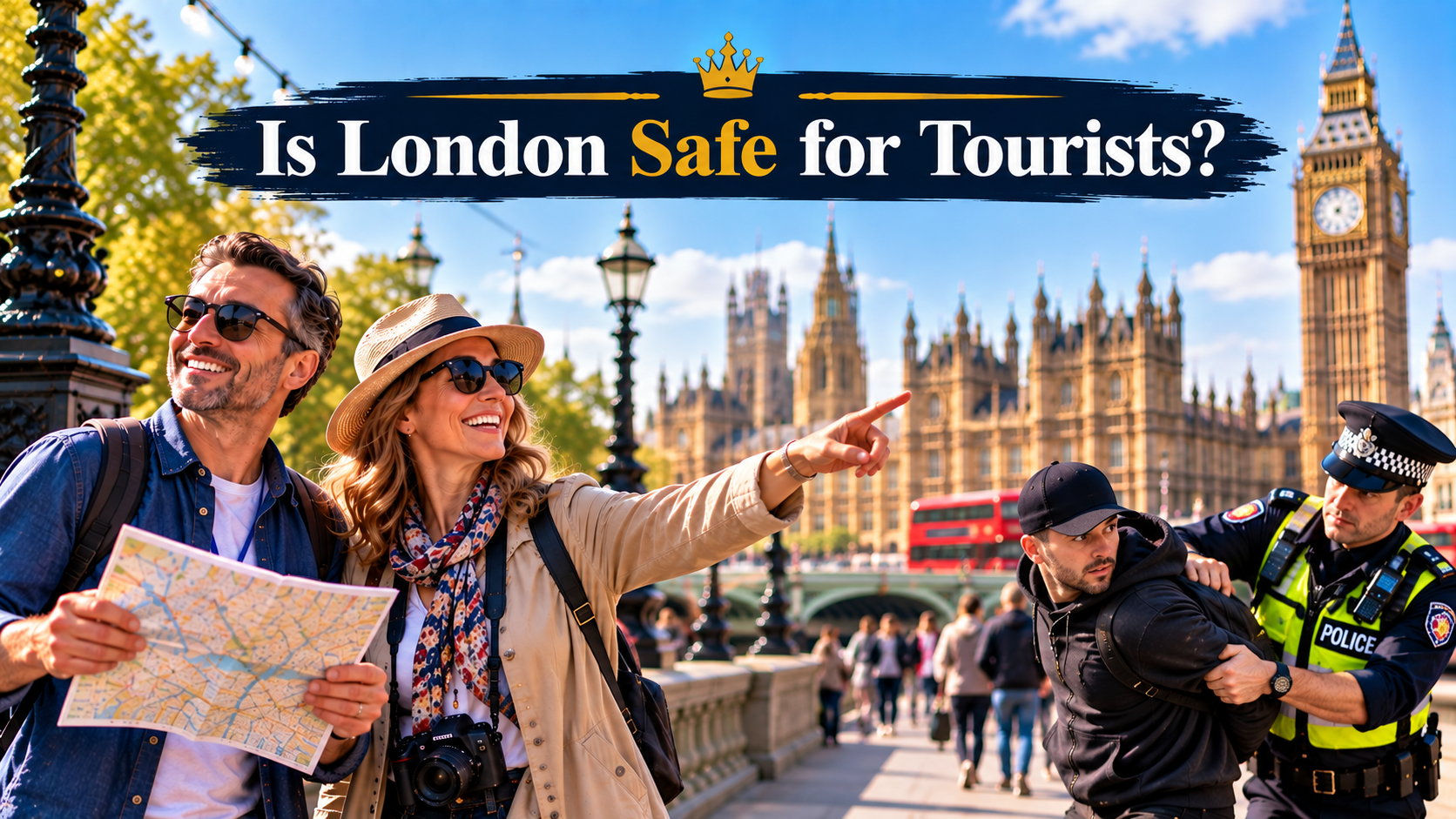
If you’re planning a trip and asking whether London is safe for tourists, the honest answer is yes.
I also understand why people ask. Stories about stolen phones and pickpockets can make any big city feel daunting before you arrive, especially if it’s your first visit.
The reassuring part is this: for most visitors, the main concern is opportunistic theft, not violent crime. Official visitor and police guidance points in the same direction. London is generally safe to visit, but sensible precautions still matter, especially in crowded places.
So if you’re wondering is it safe to visit London, I’d say yes, with your eyes open and your belongings close.
Is London safe for tourists in 2026/27? The short answer
Yes, London remains a city that millions of people visit and enjoy.
Most travellers sightsee, use the Tube, go out for dinner, and have a completely normal trip. The official advice from Visit London is balanced too. London is generally safe, but visitors should take practical steps to protect themselves and their belongings.
That is really what the 2026 & 2027 picture shows in simple terms.
The issue visitors hear about most is theft from person. In other words, pickpocketing, bag theft, or phone snatching in busy areas. That is very different from saying London is broadly unsafe.
You do not need to be alarmed. But it is worth being switched on in the busiest parts of the city.
What the real risk looks like: pickpocketing versus violent crime
When people search for london pickpocketing 2026, they’re usually trying to work out whether London feels manageable or risky.
I think it helps to separate two different concerns.
The first is theft-from-person. This is the main issue tourists should keep in mind. It includes pickpocketing, someone grabbing a phone, or a bag being taken when attention slips for a moment.
The second is violent crime. While no major city is risk-free, official visitor safety advice focuses far more on protecting belongings and staying aware than on tourists facing serious violence. For most visitors, that is the more realistic picture.
So yes, petty theft is real. But it is usually opportunistic and concentrated in crowded, tourist-heavy areas where distracted visitors are easiest to target.
That distinction matters. It means a few simple habits can go a long way.
Where tourists should be more alert in London
Most problems happen when people are busy, distracted, or carrying too much.
That often means:
- major sightseeing areas
- crowded shopping streets
- busy Tube stations
- transport interchanges
- queues outside attractions
- places where people stop for photos, maps, or tickets
In these situations, thieves are usually looking for easy openings. An open backpack, a phone held loosely near the road, or a wallet in a back pocket is much more appealing than someone who looks aware and organised.
This is why the risk can feel uneven. London itself is not one big danger zone. Instead, the problem tends to show up in certain moments and settings.
That is useful to know, because it means you can enjoy the city while simply being more alert in the busiest places.
Simple ways to lower your risk while sightseeing
The best advice is often the simplest.
If I were giving a friend a quick London safety checklist, it would be this:
- Keep your phone secure when you are not using it
- Avoid back pockets for wallets or phones
- Use a bag that zips closed properly
- Keep valuables close to your body in crowds
- Don’t leave a bag hanging on the back of a chair
- Be extra aware when boarding trains, leaving buses, or stopping for photos
- Split key items up if you can, so one loss does not ruin the day
- Check directions before you start walking, rather than standing still with your phone out for long periods
These are small habits, but they can make a big difference.
The official Met Police visitor advice is also worth a look if you want clear, practical guidance before your trip.
UK safety tips for American travellers and first-time visitors
Some of the most cautious readers are first-time visitors and Americans comparing London with large US cities.
That makes complete sense.
London can feel familiar because of the language, the landmarks, and how often you see it in films or on television. But once you arrive, it is still a huge capital city with crowds, fast-moving transport, and plenty going on around you.
So here are a few UK safety tips American travellers often find helpful, along with advice for other first-timers.
First, don’t mistake busy for dangerous. A packed station or busy street can feel intense, but it usually just means you need to hold on to your things and keep moving.
Second, be careful with your phone. Many visitors use it for maps, tickets, photos, and messages all day long. That makes it useful, but also easier to expose yourself without thinking.
Third, plan your route before you step into a crowd. Looking lost isn’t a crime, of course, but it can make you more distracted.
Finally, keep the day simple if you’re nervous. A calmer plan often means fewer rushed moments and fewer chances to be caught off guard.
Is public transport safe in London? Using the Tube and buses with confidence
Yes, for most visitors, public transport in London is safe and very practical.
Locals and visitors use the Tube and buses constantly. The main issue is not the network itself. It is distraction at barriers, on platforms, near doors, or in packed carriages.
A few habits help:
- Have your payment method ready before the barrier
- Step away from the gate if you need to stop
- Keep bags zipped on trains and platforms
- Stay aware near doors and escalators
- Avoid leaving phones loose in coat pockets
If you want official guidance before you travel, Transport for London’s safety page is useful and easy to read.
Why a private guide can make London feel easier and safer
If safety worries are taking some of the excitement out of your trip, a private guide can be a very sensible option.
I don’t mean London is too dangerous to explore alone. It isn’t. But a private guide can reduce the moments when visitors feel most exposed or overwhelmed.
You are less likely to stop in a crowded spot trying to work out directions. You are less likely to waste time navigating a busy station at the wrong moment. And you are more likely to move through the city with confidence.
That can lower stress as much as it can reduce risk.
If you’d like a calmer way to explore, the London tours from Best UK Tours are a helpful place to start. If you already know you want a more personal day out, this full-day London tour with a private guide may be worth a look too.
Final thoughts
So, is London safe for tourists in 2026 & 2027?
Yes, in general it is. Most visits go smoothly, and most travellers enjoy London without serious problems. The main thing to watch for is opportunistic theft in crowded tourist and transport areas.
That risk is real, but manageable.
Stay aware. Keep your belongings secure. Use official guidance when you need it. And if you want a safer, easier, less stressful way to explore, you can get in touch with Best UK Tours or browse more options on the Best UK Tours homepage.