English cuisine has spent the past few decades quietly staging one of the great culinary comebacks. For a long time the jokes wrote themselves, all boiled vegetables and grey meat, and some of that reputation was fairly earned. In our defence, much of it dates from wartime rationing, which did not fully end until 1954 and left an entire generation cooking from a painfully short shopping list. The England you will eat your way around today is a different country altogether, and after years of showing American visitors around it, we can say with confidence that the food is one of the genuine pleasures of the trip.
This guide covers what actually defines English food now, the classics you should try done properly, the regional specialities worth a detour, and some practical advice on finding the good versions rather than the tourist ones.
What Defines English Food Today?
English cooking is, at its heart, comfort food built on excellent raw ingredients. The farming tradition here runs deep, and the things England produces well, it produces very well indeed: grass-fed beef and lamb, remarkable farmhouse cheeses, orchard fruit, and cold-water fish landed a short drive from wherever you happen to be sitting. Seasoning tends to be gentler than in American cooking because the emphasis falls on the main ingredient rather than on what has been done to it. A properly roasted potato needs no defending.
The other defining feature is borrowing. England has absorbed flavours from every chapter of its history, which is why a curry house sits on practically every high street and why chicken tikka masala is cheerfully described by many Brits as a national dish. Modern English cuisine is the sum of all of it, the farmhouse tradition and the immigrant kitchens working side by side.
The Full English Breakfast
Start with the meal England is proudest of before ten in the morning. A full English, affectionately known as a fry up, brings together fried eggs, back bacon, pork sausages, baked beans, grilled tomatoes, mushrooms and buttered toast, with black pudding for the brave and a hash brown for the modernists. Nobody eats this every day, whatever the films suggest. It is a weekend and holiday institution, which makes it exactly right for visitors.
The baked beans tend to startle Americans the most, and they are only one of the habits we unpack in our look at the food traditions in England that surprise American visitors. Order your fry up in a proper café, the kind locals call a greasy spoon with real affection, and take your time over it. A good cooked breakfast is a sit-down event with a pot of tea attached, and it will carry you through a full morning of sightseeing without complaint.
The Sunday Roast
If you plan only one meal around English cuisine, make it a Sunday roast. The centrepiece is roast beef, lamb, pork or chicken, flanked by roast potatoes cooked until the edges shatter, Yorkshire puddings waiting to be flooded with gravy, and whatever vegetables the kitchen does best, with pigs in blankets if you are lucky. It bears a family resemblance to an American Thanksgiving dinner, with the considerable advantage that it happens every week and nobody has to host it, because the best versions are served in pubs.
That last point matters. A pub roast is a genuine institution, the good ones routinely sell out, and booking a table for Sunday lunch is entirely normal. If you have never ordered at an English bar before, our beginner’s guide to English pubs for American visitors will have you comfortable with the ritual before your first pint has settled.
Fish and Chips
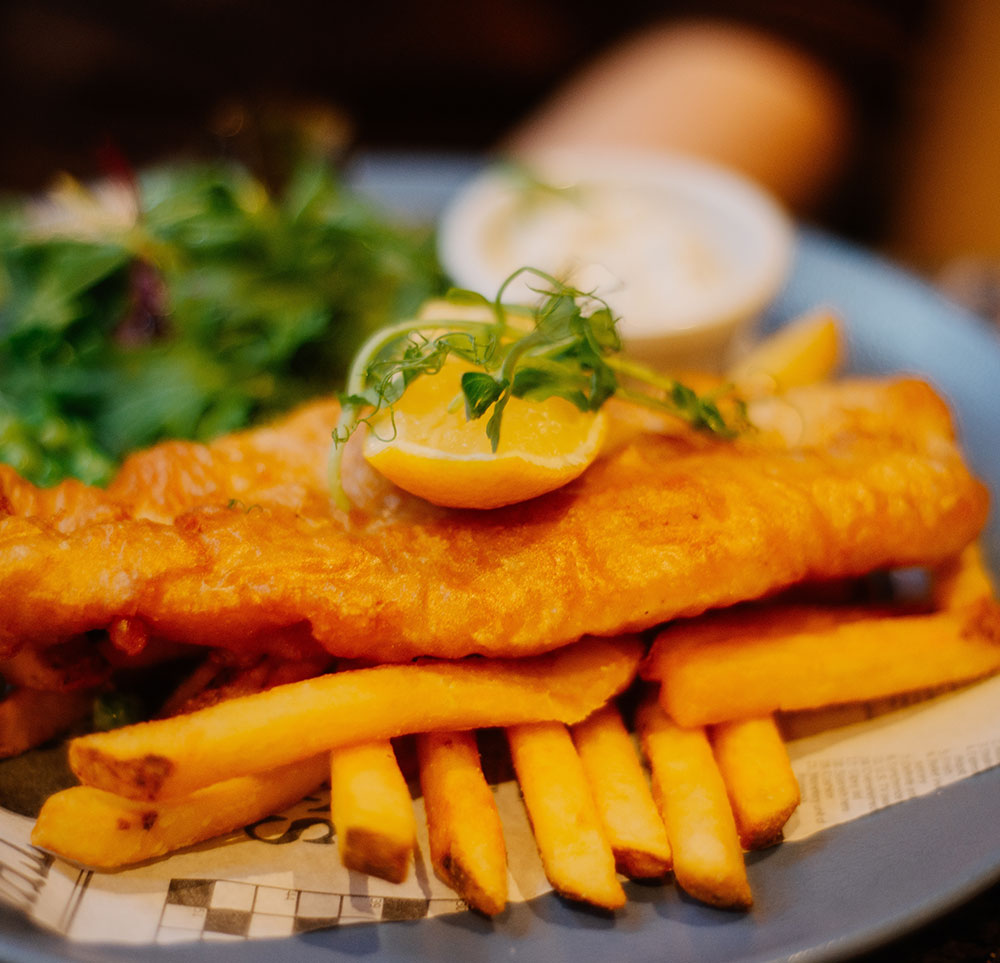
England’s most famous dish needs little introduction, but it does need choosing carefully. The real thing is cod or haddock in a crisp batter with thick-cut chips, doused in salt and malt vinegar, with mushy peas or tartare sauce on the side. The best versions come from dedicated fish and chip shops, known to everyone as chippies, rather than from laminated menus within sight of a famous landmark.
As a general rule, the closer you are to the sea, the better the fish, and eating a paper-wrapped portion on a harbour wall while defending it from the local seagulls is about as English an experience as it is possible to have. Should you want a local to point you towards the best chippies, our private tours of England are a good place to start.
Proper Pies
England takes pastry very seriously. Steak and ale pie is the benchmark, slow-cooked beef in dark gravy under a proper lid, and you will find a version on almost every pub menu in the country. The pork pie is a different creature entirely, eaten cold, with seasoned pork inside a firm hot water crust, and the most famous ones come from the Leicestershire town of Melton Mowbray. In London, the old pie and mash shops of the East End serve minced beef pies with mashed potato and a parsley sauce known as liquor, and the surviving shops are worth a visit for the tiled Victorian interiors alone.
One warning from experience: a proper pie has pastry all the way around. A stew wearing a puff pastry hat is a casserole with ambitions, and any local will back us up on this.
Afternoon Tea
Afternoon tea is the most theatrical meal in the English repertoire. Expect delicate finger sandwiches, scones with clotted cream and jam, a selection of small cakes and a proper pot of tea, all taken at an unhurried mid-afternoon pace. It began in the nineteenth century as a genteel way to bridge the long gap between lunch and a fashionably late dinner, and it survives today as a treat rather than a daily habit, which is precisely how visitors should approach it.
The great national debate is whether cream or jam goes onto the scone first. Devon says cream, Cornwall says jam, and we recommend testing both methods thoroughly before declaring a loyalty. Hotels and tearooms across the country serve afternoon tea, and the well-known ones book up, so reserve ahead if you have somewhere particular in mind. In London you can also take it on the move, since our afternoon tea bus tour serves the sandwiches and scones aboard a restored 1960s Routemaster as it passes the landmarks.
Regional Specialities Worth Seeking Out
English food is fiercely regional, and some of the best eating comes from ordering whatever the area you are standing in is famous for. A few worth planning around:
- The Cornish pasty, a folded pastry case of beef, potato, swede and onion, originally baked as a portable lunch for Cornwall’s tin miners;
- The Cumberland sausage, a coiled, generously peppered pork sausage from the north west;
- Lancashire hotpot, lamb and onions baked slowly under a lid of sliced potatoes;
- The Bakewell pudding and its neater cousin the Bakewell tart, both from the Derbyshire town of the same name;
- Cheddar, from the Somerset village whose caves matured the world’s most imitated cheese;
- Stilton, England’s great blue cheese, still made in a small cluster of East Midlands dairies.
None of these demand a special expedition. They simply reward noticing where you are and ordering accordingly, which is half the fun of travelling through a country this compact.
The Modern Restaurant Scene
The change in English food over the past thirty years has been real rather than a marketing story. The gastropub movement began in London in the early 1990s, put serious cooking into ordinary pub rooms, and then spread across the whole country, which is why some of England’s best meals are now served in village pubs with log fires and muddy boots by the door. London itself has grown into one of the world’s great restaurant cities, cooking practically every cuisine on earth at every price point, and food markets such as Borough Market near London Bridge will build you a memorable lunch out of a slow wander.
Curry deserves its own paragraph. British Indian food has become a cuisine in its own right, shaped over generations by South Asian families across England, and cities such as Birmingham, home of the Balti Triangle, along with Bradford and Manchester, guard their curry reputations jealously. Ending a day of sightseeing with a proper curry is a thoroughly English thing to do, whatever the names on the menu might suggest.
Where Visitors Actually Eat Well
After years of feeding hungry guests between stops, we have a few reliable rules. Eat in pubs, especially on Sundays, and favour the ones full of locals over the ones displaying photographs of their food. Choose a chippy over restaurant fish and chips, and a café fry up over a hotel breakfast at least once. In any market town, the bakery with the queue outside is the right bakery. Restaurants within sight of a major attraction rarely need to feed anyone twice, and the cooking tends to show it, so walking ten minutes in any direction will almost always improve your lunch.
It is also worth knowing that English mealtimes will feel familiar in some ways and pleasingly foreign in others. Dinner happens earlier than you might expect, and tea appears at every possible opportunity. Dessert, meanwhile, answers to the name of pudding regardless of what it actually is. Treat the quirks as part of the itinerary rather than obstacles to it. The same applies to the rest of the trip, and our round up of classic English experiences worth building a visit around covers what tends to fill the hours between meals.
If you have any questions about eating your way around England, just ask us, we are here to help with more than tours and days out. As a destination management company, we can point you in the right direction, and if you would rather have a local handle the ordering, we would be delighted to show you where England keeps the good stuff.